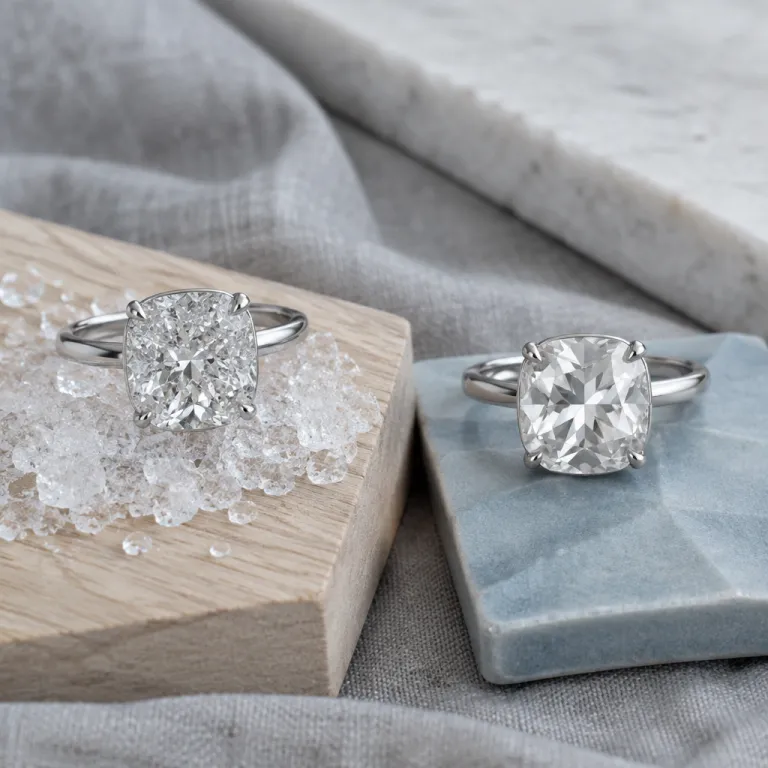
Why cushion cut engagement ring facets matter more than you think
A cushion cut engagement ring looks soft and romantic, yet its facets decide everything about its personality. The same cushion outline can hide radically different cutting styles, so this cushion cut engagement ring facets guide exists to protect you from surprises. When you choose between crushed ice and chunky modified brilliant facets, you are really choosing how your diamond will behave in every café, office, and kitchen you walk into.
Gemologists use the word cut to describe how a diamond’s facets are arranged, not just how much sparkle you see. Two cushion cuts with identical carat weight, color, and clarity can look like completely different diamonds because their facet patterns redirect light in opposite ways. That is why couples comparing engagement rings online often feel confused when one cushion cut diamond glows with bold flashes while another looks like glittering slush.
Think of diamond shape as the outline, and think of cuts as the internal architecture. A cushion cut has a rounded square or slightly elongated outline, but the internal facets can mimic a round brilliant, an emerald cut, or something in between. When you understand these cushion cuts from the inside out, you stop shopping for generic jewelry and start choosing a specific diamond engagement look that suits your hand and your daily life.
Compared with a classic round cut, a cushion cut diamond ring usually shows softer corners and a more romantic profile. Yet the brilliance can rival a brilliant cut round if the cushion modified pattern is executed well by a skilled cutter. Couples who love vintage rings often gravitate toward cushions because they echo antique diamond shape aesthetics while still feeling modern enough for a sleek solitaire engagement ring.
Within this one family you will find crushed ice cushions, chunky modified brilliant cushions, and old mine style cushion cuts. Each of these cuts uses different facets to trade between brightness, fire, and pattern, which changes how any diamond ring photographs and how it feels in low restaurant lighting. Before you commit to a cut engagement choice, you need to see how each style of cushion cut diamond performs in motion rather than trusting a single still image.
Crushed ice vs chunky modified brilliant: two cushions, two worlds
Crushed ice cushion cuts look like a thousand tiny sparkles, while chunky modified brilliant cushions show larger, more defined flashes. In a crushed ice cushion cut engagement ring, the facets are split and stacked so densely that individual reflections blur into a shimmering pool. A chunky cushion modified brilliant cut diamond instead uses broader facets that create bold on off flashes, closer to a round brilliant cut but with a softer cushion outline.
When you tilt a crushed ice cushion cut, the brilliance feels busy and glittery, especially under strong spotlights. Some couples love that effect because it hides inclusions and can make lower clarity diamonds look more forgiving in everyday jewelry. For crushed ice cushions, many shoppers are comfortable around SI1–SI2 clarity and G–I color, especially in yellow or rose gold, because the chaotic sparkle and warmer metal tone disguise minor imperfections.
Chunky modified brilliant cushion cuts show a recognizable pattern of facets, often with a symmetrical X or flower shape in the center. This style of cut diamond tends to emphasize both brightness and fire, so you see colored flashes as you move your hand through different lighting. If you are drawn to vintage inspired engagement rings with character, these chunkier cushion cuts often echo old mine diamonds while still feeling modern, and buyers frequently target VS2–SI1 clarity with H–J color to keep the facets crisp without overpaying.
Old mine cushions, which many people associate with the Taylor Swift effect and antique jewelry, sit somewhere between vintage and modern. They usually have higher crowns, smaller tables, and fewer facets, so the brilliance feels slower and more romantic rather than hyper sparkly. If you are considering a true antique or a newly cut diamond in an old mine style, read a detailed guide on why to choose an old mine cut diamond ring for your wedding on this dedicated resource about old mine cushion rings, and expect many connoisseurs to favor VS2–SI1 clarity with I–K color to preserve a period appropriate look.
Because laboratories like GIA do not label cushion subtypes on the certificate, you will not see “crushed ice” or “modified brilliant” written anywhere. The grading report will simply say cushion cut or sometimes cushion modified brilliant, which hides huge visual differences between cut diamonds that share the same words. Your eyes, not the paperwork, must decide whether you prefer the glitter of crushed ice cushions or the structured brilliance of chunky cushion cuts.

Length, width, and elongated cushions: matching the diamond to your hand
Beyond facet style, the length to width ratio of a cushion cut engagement ring quietly shapes how it looks on your finger. A square cushion cut with a ratio close to 1.00:1 feels balanced and classic, while an elongated cushion between about 1.15:1 and 1.25:1 stretches gracefully along the finger. This cushion cut engagement ring facets guide would be incomplete without explaining how those proportions change both brilliance and comfort.
Square cushion cuts usually distribute light more evenly, so the brilliance feels centered and symmetrical. If you like the look of a round cut but want softer corners, a square cushion modified brilliant cut diamond can be a perfect compromise. People with smaller hands or shorter fingers often find that square cushion diamonds sit neatly without overwhelming the ring finger or bumping against neighboring rings.
An elongated cushion can create a slimming effect, similar to what a marquise cut or an emerald cut does, but with gentler edges. These elongated cushion diamonds often show a slightly different facet rhythm, because the cutter must stretch the pattern to maintain brightness along the longer axis. If you love the finger coverage of a radiant cut but prefer a more romantic diamond shape, an elongated cushion cut engagement ring offers that balance.
Length to width also interacts with color and clarity in subtle ways. Longer cushions can show more body color near the tips, so you may want to prioritize color clarity balance slightly higher than you would for a compact round cut, often aiming for G–H color if you are sensitive to warmth. In contrast, a squarer cushion cut diamond can sometimes hide warmth better, especially in yellow or rose gold jewelry where the metal color already softens the contrast.
Do not forget that your setting and wedding band will frame whatever diamond shape you choose. A three carat marquise diamond ring, for example, creates a very different hand presence than a three carat elongated cushion, even at the same carat weight, as you can see in this detailed look at a three carat marquise diamond ring as a luminous symbol of commitment. Try on both square and elongated cushion cuts in person, because the right ratio for your engagement ring is the one that makes your hand feel elegant rather than crowded.
Settings, color, and clarity: how cushions behave in real life
The same cushion cut diamond can look dramatically different in a halo, bezel, or solitaire setting. A halo around a cushion cut engagement ring amplifies the outline, making square shapes appear larger and elongated cushions feel even more stretched. If you prefer a quieter look, a simple solitaire ring or a bezel that frames the cushion shape can let the facets and brilliance take center stage.
Color and clarity choices also play differently in cushions than in round cut diamonds. Because many cushion cuts have deeper pavilions and more varied facets, they can sometimes trap color, especially in crushed ice styles where light bounces around more chaotically. That means you may want to invest slightly more in color clarity for a cushion cut engagement ring than you would for a comparable round brilliant cut diamond, often targeting at least H color and SI1 clarity for a bright, eye clean stone in white metals.
Vintage inspired settings with milgrain, tapered baguettes, or an asscher cut or emerald cut side stone can emphasize the old world charm of cushion cuts. In contrast, a very modern thin band in platinum or white gold will highlight the contrast between a chunky modified brilliant cushion and the clean metal lines. If you are drawn to colored stones, a cushion cut sapphire or emerald framed by small diamonds can echo the same soft diamond shape while changing the entire mood of the jewelry.
Different cuts also respond differently to daily wear and lighting. Crushed ice cushions often look their best under strong artificial lights, while chunky modified brilliant cushions hold their pattern even in softer daylight or candlelight. When you are comparing engagement rings, move between window light, overhead LEDs, and dim corners to see how each diamond ring behaves in the environments where you actually live.
Budget plays a role here too, especially with gold prices affecting the cost of every engagement ring setting. If you are weighing trade offs between carat weight, metal choice, and facet style, it helps to understand how gold pricing shifts what your engagement ring actually costs, which you can explore in more depth through this analysis of how gold prices reshape engagement ring budgets. Once you know how much of your budget goes to metal versus the cut diamond itself, you can decide whether to prioritize a higher color clarity cushion cut or a larger but slightly warmer stone.
Reading certificates and judging cushions in person
Certification for cushion cuts comes with quirks that many couples only notice after the proposal. A GIA report will tell you the diamond shape, carat weight, color, clarity, and basic proportions, but it will not specify whether the cushion cut is crushed ice, chunky modified brilliant, or old mine style. That gap is exactly why a cushion cut engagement ring facets guide matters when you are buying online or commissioning custom jewelry.
On a typical report you might see “cushion brilliant” or “cushion modified brilliant” listed as the cut style. Those words cover a huge range of actual facet layouts, from tight crushed ice cushions to broad chunky cushions with strong brilliance. Two cushion modified brilliant cut diamonds can share identical numbers on paper yet look like completely different cuts once you see them side by side.
Because the certificate cannot show you the real facet pattern, you need to rely on high quality images and videos. Look for clear face up photos, 360 degree videos, and if possible, ASET or Ideal Scope images that reveal how the facets handle light. An ASET image uses colored zones (typically red, green, and blue) to map where light enters the diamond, while an Ideal Scope image highlights light leakage as pale or white areas, so both tools help you judge how efficiently a cushion cut returns light.
When you view a cushion cut engagement ring in person, tilt it slowly, look for dark dead zones, and notice whether the brilliance feels even or patchy across the diamond ring. Comparing cushions to other shapes can sharpen your eye quickly. Place a cushion cut next to a round cut, an emerald cut, an asscher cut, a radiant cut, and a marquise cut, then watch how each diamond shape returns light differently as you move your hand.
You will start to see that cushion cuts sit on a spectrum between the structured brilliance of a round brilliant cut and the hall of mirrors effect of step cuts like emerald cut diamonds. In the end, the best cushion cut engagement ring is the one whose facets make you pause every time you catch them in passing light. Numbers, certificates, and grading reports matter, but they are only part of the story of your diamond engagement choice. What stays with you is not the certificate, but how it catches light on a Tuesday morning.
FAQ
Are cushion cut engagement rings more sparkly than round cut rings
A well cut round brilliant diamond usually delivers the highest overall brightness because its facets are optimized for light return. Cushion cuts can be very sparkly, especially chunky modified brilliant styles, but they trade some raw brightness for a softer, more romantic pattern. If maximum brilliance is your priority, choose a top quality round cut, while cushions are better when you want character and a vintage leaning feel.
What is the difference between crushed ice and chunky cushion facets
Crushed ice cushions use many small, irregular facets that create a glittery, almost slushy appearance with less visible pattern. Chunky cushions, often called modified brilliant cushions, use larger, more organized facets that produce bold on off flashes and a recognizable internal design. The choice comes down to whether you prefer a busy sparkle that hides inclusions or a structured brilliance that shows every facet clearly.
Do cushion cut diamonds show more color than other shapes
Cushion cuts often show body color more readily than round brilliant diamonds because of their deeper pavilions and varied facet structures. Crushed ice cushions in particular can trap color, making lower color grades appear slightly warmer, especially in white metals. If you are sensitive to warmth, consider choosing a slightly higher color grade for a cushion cut engagement ring than you would for a comparable round cut.
Is an elongated cushion better than a square cushion for small hands
Elongated cushions can visually lengthen the finger, which many people with smaller hands appreciate, but they also cover more surface area. Square cushions feel more compact and balanced, which can be easier to wear if you prefer a subtle diamond ring. The best approach is to try both ratios on your hand and see which shape feels elegant rather than overwhelming.
Why does my certificate say cushion modified brilliant but the stone looks crushed ice
Laboratories use broad categories like cushion modified brilliant to describe many different facet layouts, including both chunky and crushed ice styles. That means the wording on the report cannot guarantee a specific visual look, only a general cut family. To avoid surprises, always review detailed photos and videos or see the diamond in person before finalizing your engagement ring purchase.