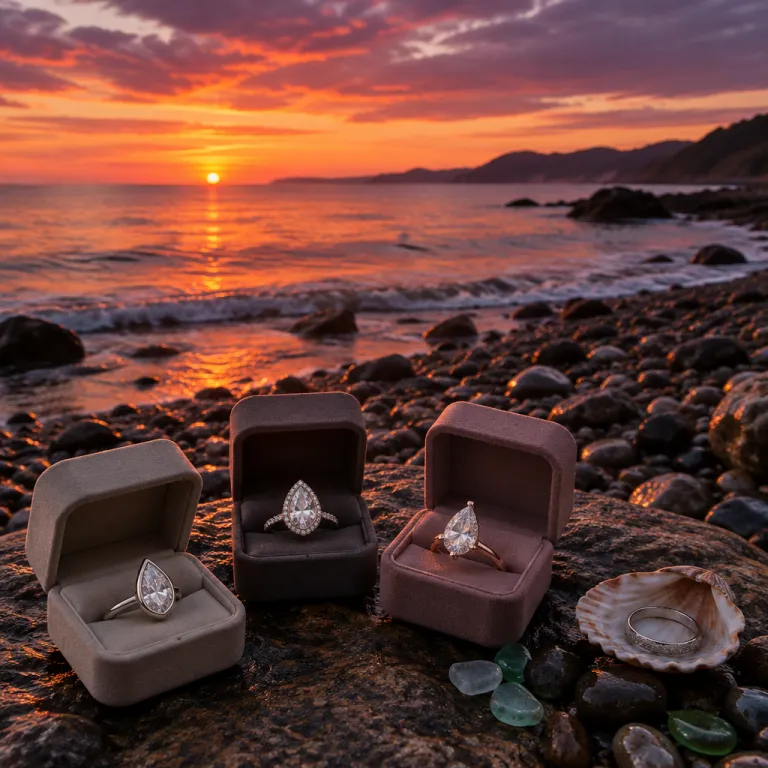
How this pear shaped engagement ring setting guide helps you read your own hand
A pear shaped engagement ring lives between marquise drama and oval softness. When you treat this guide as your personal pear shaped engagement ring setting guide, you start seeing how every angle, every prong, and every millimeter of length width ratio changes the story on your finger. The goal is simple yet demanding; your chosen pear diamond should feel like it was cut and set for your exact hand, lifestyle, and budget.
The classic pear shape combines a rounded end with a pointed tip, so one side echoes a round diamond while the other leans into a teardrop silhouette. That asymmetry means the same shaped diamond can look delicate on one person and bold on another, depending on the ring setting, the metal color of the gold or platinum, and how you wear pear orientation on the hand. A well planned shaped engagement design respects that duality and uses the setting to control how much sparkle, finger coverage, and drama you actually want.
Think of the pear cut as a calibrated tool rather than a trend. A 1.00 carat pear can offer more visible surface area than a 1.00 carat round, so you often gain presence without paying the same premium per carat for a round brilliant diamond engagement stone. This is why many couples quietly pivot from round engagement rings to pear engagement rings once they compare real diamonds side by side under normal lighting, not just under a jewelry store spotlight.
Because the pear shaped profile is directional, you also have more control over how the ring will visually lengthen or balance your fingers. Point up, point down, or east west across the finger — each orientation turns the same shaped ring into a different character. This pear shaped engagement ring setting guide will walk you through those choices so you can explain exactly what you want before a jeweler starts sketching or showing you loose stones.
Underneath the romance, there is engineering. The pointed tip is a vulnerable point of concentrated pressure on a cut diamond, so the right prong or bezel setting is not optional if you plan to wear the ring daily. When you understand how each setting protects that center stone and how each halo or three stone layout changes the visual weight, you stop guessing and start directing the design process with confidence.
North south, east west, or inverted: how direction changes everything
Most people picture a pear shaped engagement ring worn north south, with the rounded end toward the hand and the point aimed at the fingertip. In that classic orientation, the pear shape pulls the eye along the finger, creating a lengthening effect that many future married people love, especially when the length width ratio sits in the 1.50 to 1.75 range. If you go shorter than a 1.40 length width ratio, the stone leans into a softer teardrop look, while a ratio above about 1.80 can feel stretched and less balanced.
Turn the same pear diamond sideways and you get an east west orientation, which reads modern and architectural rather than traditional. An east west pear cut often looks fantastic in a low bezel setting or a sleek four prong design, because the stone hugs the finger and resists snagging on clothes during daily wear. Couples who type a lot, work with their hands, or want a shaped engagement style that feels more like a design object than a classic engagement ring often end up surprised by how much they like east west rings once they try them on.
There is also the inverted option, where the point faces the wrist and the rounded end points toward the fingertip. Inverted pear engagement rings feel a little subversive and can look especially striking in a three stone layout, with small round diamonds or tapered baguettes flanking the center stone. Because the point is now closer to the hand, a strong V shaped prong or partial bezel around the tip becomes even more important to protect the cut diamond from knocks against tables, bags, or door handles.
Direction also changes how any halo interacts with the stone. A north south halo around a carat pear can exaggerate the finger lengthening effect, while an east west halo reads more like a bold shaped ring that spans the finger from side to side. If you are drawn to hidden details, pairing a pear diamond with a hidden halo or secret sparkle design, as explained in this guide to hidden diamond settings in wedding rings, can give you extra brilliance without making the overall shape feel too large.
Whichever direction you choose, think about how you actually wear pear jewelry during a normal week. Try on a pear shaped diamond engagement ring, then flex your fingers, hold a coffee cup, and slide your hand into a pocket to see where the point sits in real life. That lived in test will tell you more about the right orientation than any studio photo, because you will see exactly how the sparkle moves and where the stone might be vulnerable.
Protecting the point: prongs, bezels, and cathedral architecture
The pointed tip of a pear diamond is both its drama and its weak spot. All the weight of the cut converges into that single point, so a casual knock that would barely mark a round stone can chip a pear shaped tip if the setting is not engineered correctly. That is why any serious pear shaped engagement ring setting guide starts with how you protect that point before you think about halos or side stones.
A V shaped prong is the workhorse solution for most pear engagement rings. Instead of two separate prongs trying to grip the tip from either side, a V prong cradles the point in a small metal corner, spreading impact across a wider area of gold or platinum. When you look closely at a well made V prong on a carat pear, you should see the metal hugging the outline of the shape without covering so much of the stone that it kills the sparkle at the tip.
Some couples prefer the clean outline of a bezel setting, where a thin rim of metal wraps all the way around the shaped diamond. A full bezel offers excellent protection for daily wear, especially if you work in healthcare, education, or any job where your hands are constantly in motion and you cannot baby your engagement ring. A partial bezel or half bezel can be a smart compromise, leaving the rounded end more open while still guarding the point with a solid band of metal.
Cathedral settings add another layer of security by raising the shoulders of the ring up toward the center stone. Those arches of metal act like guardrails, helping shield the pear shape from side impacts while also giving the profile a more architectural feel. If you pair a cathedral design with a six prong layout and a V prong at the tip, you get a shaped engagement ring that feels airy from the top but quietly reinforced from every angle.
Side stones and halos can also contribute to protection when they are thoughtfully engineered. A three stone pear engagement ring with small round diamonds flanking the center stone can help buffer the edges, while a tight halo of small diamonds creates a cushion of metal and stones around the outline. For more ideas on how different stone settings change both protection and style, it is worth reading about the allure of stone set wedding rings before you finalize your design.
Shape, bow tie, and sparkle: reading a pear cut like an expert
Not every pear cut diamond that looks good in a stock photo will look good on your hand. The length width ratio, the outline symmetry, and the internal pattern of light and dark all decide whether a pear shaped stone feels lively or flat. When you know what to look for, you can evaluate a pear diamond in person or on video without relying only on grading reports.
Start with the outline shape. A balanced pear shape should flow from the rounded end into the point without any flat spots, bulges, or shoulders that make the stone look off center, and both sides of the shaped diamond should mirror each other as closely as possible. If one side of the pear engagement stone looks fuller or more curved than the other, that asymmetry will be obvious once the ring is on your finger and may bother you over time.
Next, pay attention to the bow tie effect, which is the dark bow shaped area that can appear across the middle of some elongated cuts. Pear cuts, like ovals and marquise shapes, often show some bow tie, but the key is whether that bow tie moves and softens as you tilt the stone under normal lighting. A well cut pear diamond will show a subtle bow tie that blends into the overall sparkle, while a poorly cut diamond engagement stone can have a harsh, dead looking bow tie that stays dark from every angle.
Brilliance per carat is one of the quiet strengths of pear cuts. Because the faceting pattern borrows from the round brilliant, a well cut pear shape can throw a lot of sparkle for its carat weight, often at a lower price per carat than a comparable round diamond. That means a 1.20 carat pear engagement ring can look as bright and commanding as a smaller round engagement ring, especially if you frame the center stone with a delicate halo or a pair of tapered baguettes in a three stone layout.
Color and clarity choices also play differently in pears than in rounds. The pointed tip tends to show color more readily, so if you are sensitive to warmth, you may want to stay a little higher in color grade than you would for a round, particularly in yellow gold where the metal already adds warmth. On the clarity side, small inclusions near the rounded end or under a prong are often invisible in daily wear, while a dark inclusion right in the bow tie area can be distracting every time the ring catches the light.
Designing for your lifestyle: halos, bands, wraps, and real world wear
Once you understand direction, protection, and cut quality, the fun part begins; shaping the overall ring design around your actual life. A pear shaped engagement ring can be a minimalist solitaire, a vintage inspired halo, or a bold three stone piece, and each choice changes how the ring will feel on your hand every day. The right design is the one that still feels like you when you are doing dishes, commuting, or holding a sleeping child, not just when you are posing for photos.
Halos remain popular for pear engagement rings because they emphasize the outline and add perceived size without the cost of jumping to a much larger carat pear. A tight halo of small round diamonds around a pear shape can also help visually balance a slightly long length width ratio, making a stretched stone look more proportionate. If you prefer a cleaner look, a simple solitaire with a tapered band can let the shaped diamond stand alone while still giving you the finger lengthening effect that makes many people fall for pears in the first place.
Band styling matters more than most couples expect. A straight wedding band will sit differently against a north south pear than against an east west or inverted design, and some shaped engagement rings need a curved or notched band to nestle flush. If you already own an engagement ring and want to change the look without replacing the center stone, ring wraps and enhancers can be a smart way to add a halo effect, extra diamonds, or metal detailing; this guide to ring wraps and enhancers explains how they can transform an existing pear shaped ring.
Metal choice also changes the mood. Yellow gold leans into warmth and can make a near colorless pear diamond feel romantic and vintage, while white gold or platinum sharpen the outline and emphasize the crisp geometry of the cut. Rose gold can be beautiful for a softer, more romantic shaped engagement style, especially when paired with a bezel setting or delicate pavé on the band.
Finally, think about how you will wear pear jewelry over time. If you are hard on your hands, a low set bezel or a sturdy cathedral with a V prong may outlast a very high, delicate prong setting, even if the latter looks ethereal in photos. The ring that will make you happiest is not the one that looks most dramatic in a box, but the one whose sparkle still makes you pause on a random Tuesday morning when you catch it in the bathroom mirror.
FAQ
What is the best length to width ratio for a pear shaped engagement ring?
Most people find that a length width ratio between about 1.50 and 1.75 gives a balanced pear shape that feels neither too stubby nor too stretched. Ratios below roughly 1.40 tend to look more like a soft teardrop, while ratios above about 1.80 can feel narrow and elongated on the finger. Trying on different ratios in person is the most reliable way to see what flatters your hand.
Should the point of a pear diamond face up or down?
Traditionally, the point faces the fingertip in a north south orientation, which visually lengthens the finger and feels classic. Some people prefer an inverted orientation, with the point toward the wrist, for a more unconventional look, while others choose an east west layout for a modern, horizontal silhouette. There is no rule of etiquette here; the right direction is the one that looks and feels best to you in everyday wear.
How important is a V prong for a pear shaped diamond?
A V prong at the tip of a pear diamond is strongly recommended, because it helps protect the most fragile point of the stone from chipping. Standard prongs that try to grip the tip from the sides can leave the actual point exposed, especially if the ring is worn daily. If you do not like the look of a V prong, a partial or full bezel around the tip can offer similar protection.
Do pear shaped engagement rings show a bow tie effect?
Many pear cuts show some degree of bow tie, which is the darker bow shaped area across the center of the stone. A well cut pear will have a subtle bow tie that blends into the overall pattern of light and dark and moves as you tilt the ring. A very strong, static bow tie that stays dark from every angle can make the diamond look less lively, so it is worth evaluating this in person or on high quality video.
Are pear shaped diamonds more affordable than round diamonds?
Pear shaped diamonds often cost less per carat than comparable round brilliant diamonds, partly because rounds are in higher demand and require more rough stone to cut. Since pears can offer more visible surface area for the same carat weight, you may get a larger looking center stone for your budget. That value difference is one reason many couples choose a pear shaped engagement ring once they compare options side by side.