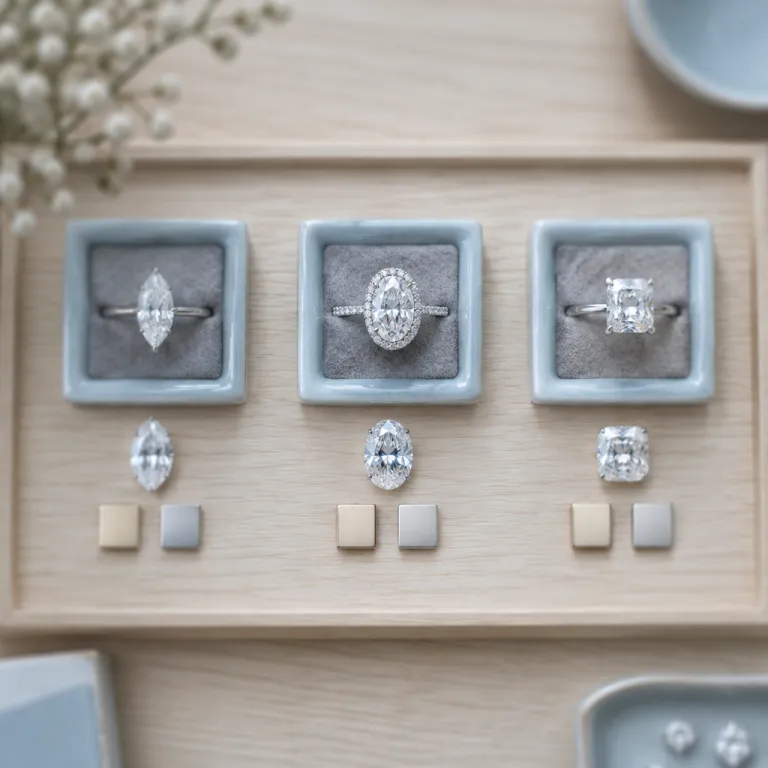
Why hybrid diamond cuts are reshaping engagement ring expectations
A hybrid diamond cut engagement ring 2026 style is less about a date and more about a mindset. Couples want an engagement ring that feels recognisable yet quietly rebellious, so hybrid cuts sit between classic diamond shapes and full custom experiments. You are not choosing between round and oval anymore, you are choosing how the stone tells your story.
At its core, a hybrid cut is a diamond shape that blends features from established cuts, such as a marquise cut softened into a “moval” or an elongated cushion cut stretched for more finger coverage. These hybrid cuts use familiar diamond cuts as a starting point, then tweak the outline, facet pattern, and length to width ratio to create something modern without losing timelessness. That is why ring trends now show moval diamonds, elongated shapes, and antique cuts reimagined in sleek gold settings instead of only traditional solitaires.
When you hear “hybrid diamond cut engagement ring 2026” in a showroom, translate it as a design that refuses strict categories. The diamond ring might pair a brilliant cut facet pattern with an antique outline, or mix art deco geometry with a soft oval silhouette. Hybrid engagement rings work especially well for couples who like vintage inspired details but still want clean, modern lines and excellent light performance from both natural diamonds and lab grown stones.
Because these cuts sit between standards, quality assessment shifts from reading a certificate to reading the actual stone. You will still care about carat weight, color grade for white or colored diamonds, and clarity, but the cut grade on a report tells less of the story. Your eyes, a good loupe, and a trusted jeweler become the real tools for judging a cut diamond in these new shapes.
Hybrid cuts also change how you think about budget and value. Since there is no universal pricing template for a moval or elongated cushion cut, two diamonds with similar carat weight can be priced very differently across retailers. That lack of standardisation can work in your favor if you are willing to compare stones carefully and prioritise actual beauty over a famous brand name.
What makes a moval: between marquise and oval without the drama
A moval is a hybrid diamond shape that blends the pointed marquise cut with the rounded oval cut. Think of it as more elongated than a classic oval diamond but softer and less dramatic than a full marquise, with tips that are gently tapered rather than needle sharp. On the hand, a moval engagement ring reads elegant and modern, not costume level bold.
Technically, most moval diamonds sit in a length to width ratio range of roughly 1.4 to 1.7, which means the stone looks elongated but not cartoonishly long. The corners are rounded or lightly chamfered, so you avoid the fragile points that make some marquise cuts chip more easily in daily wear. Many moval stones use a brilliant cut facet pattern, so you still get the lively sparkle people love in round brilliant diamonds rather than the hall of mirrors effect of an emerald cut.
Because there is no official grading category for “moval,” you will see a wide variety of outlines and diamond cuts sold under that label. Some look almost like antique cuts with chunkier facets and a slightly pillowy outline, while others lean very sleek and modern with tight brilliant cut faceting. When you shop, compare several moval diamonds side by side and pay attention to bow tie shadows, which can appear as dark bands across the center of elongated shapes.
Light performance matters more than the name on the tag. Ask for a 360 degree video and look for even brightness, minimal dead zones, and symmetry between the left and right sides of the stone. This is where understanding how precision cutting tools shape brilliance can help, and a guide on how diamond cutting wheels influence sparkle gives useful context before you commit.
Moval engagement rings pair beautifully with bold gold settings. A chunky yellow gold bezel can frame the elongated outline, while a slim white gold pavé band keeps the focus on the diamond shape itself. If you prefer lab grown options, grown diamonds in moval cuts often cost less per carat weight than natural diamonds, which lets you size up without stretching the budget.
Elongated cushion cuts and how stretching the outline changes everything
A standard cushion cut diamond is squarish with soft corners and a pillowy outline. When cutters stretch that outline into an elongated cushion cut, the stone suddenly covers more of your finger and reads sleeker, almost like a softened emerald cut. This is where a hybrid diamond cut engagement ring 2026 style really shines for couples who want both romance and edge.
Elongated cushion diamonds usually sit in a length to width ratio between about 1.15 and 1.35, which gives a gentle rectangle effect without losing the rounded corners that make cushion cuts feel vintage inspired. The facet pattern can be a crushed ice style with many small reflections or a chunky brilliant cut pattern that shows larger, more defined flashes of light. Neither is objectively better, but each interacts differently with colored diamonds, white diamonds, and various settings.
Stretching a cushion cut changes how light travels through the stone. A well cut elongated cushion will still return plenty of brilliance, but you might see more contrast and patterning than in a perfectly symmetrical round brilliant cut. That is part of the charm, and it is why many designers pair elongated cushion diamonds with art deco inspired settings that celebrate geometry rather than hiding it.
Because there is no standard cut grade for elongated cushion shapes, you need to rely on your eyes and some simple checks. View the diamond ring face up and tilt it slowly, watching for dark bands that stay fixed instead of moving; those can signal poor light performance. For more nuance on how length to width ratio affects what you see, a resource on how ratios shape elongated stones is surprisingly relevant, even though it focuses on oval engagement rings.
Elongated cushion engagement rings work beautifully in both solitaire and three stone layouts. A single elongated cushion diamond on a plain gold band feels quietly luxurious, while side stones such as tapered baguettes or small pear shapes add width and balance. Lab grown elongated cushion diamonds can be a smart way to prioritise carat weight and cut quality, especially if you want a larger center stone without compromising on ethical sourcing.
Settings, metals, and ring trends that flatter hybrid shapes
Hybrid cuts like moval and elongated cushion diamonds behave differently in settings than classic rounds. Their elongated shapes naturally draw the eye along the finger, which can make your hand look longer and more graceful. The right engagement ring design amplifies that effect instead of fighting it.
East west settings, where the stone is set horizontally across the finger, are one of the strongest ring trends for hybrid shapes. A moval or marquise inspired cut diamond turned sideways feels instantly modern, especially on a wide gold band with minimal detailing. Bezel settings, which wrap metal around the edge of the diamond, protect delicate tips on antique cuts while giving a sleek, almost art deco frame.
If you love vintage inspired aesthetics, consider pairing a hybrid diamond shape with milgrain edges, hand engraving, or small antique cuts as side stones. These details nod to antique jewelry without locking you into a fully traditional look, especially when combined with white gold or platinum for a cooler tone. Yellow and rose gold, on the other hand, warm up white diamonds and can make colored diamonds appear richer and more saturated.
Chunky bands are another modern favorite for hybrid diamond ring designs. A thicker shank in solid gold balances the visual length of elongated stones, so the diamond does not feel like it is floating alone. For couples who prefer lab grown options, grown diamonds in hybrid cuts look especially striking in minimalist settings, where the unusual outline becomes the main design feature.
Stacking engagement rings with wedding bands requires a bit more planning when you choose non standard diamond shapes. Straight bands may leave small gaps around a moval or elongated cushion cut, which some people love and others dislike. If you want a flush fit, ask your jeweler to mock up curved or notched bands that hug the diamond shape, and remember that custom work around hybrid cuts can be more affordable than you expect because the metal, not the stone, carries most of the design labor.
Pricing, evaluation, and long term considerations for hybrid diamond cuts
Hybrid diamond cuts sit in a strange but often advantageous corner of the market. Because there is no standardised category for a moval or elongated cushion cut, price comparisons between retailers are less straightforward than for round brilliant diamonds. That ambiguity can protect you from cookie cutter markups but also demands more careful evaluation.
When you shop for a hybrid diamond cut engagement ring 2026 style, start by setting priorities around carat weight, cut quality, and whether you prefer natural diamonds or lab grown stones. Natural diamonds in unusual diamond shapes may carry a premium if the rough crystal allowed an especially efficient cut, while lab grown grown diamonds often offer more size for the same budget. In both cases, insist on seeing how the cut diamond performs in real lighting, not just under a jewelry counter spotlight.
Because grading labs do not assign special cut grades for moval, elongated cushion, or other hybrid cuts, you must rely on visual assessment. Look for symmetry in the outline, balanced brilliance across the face, and minimal windowing or dead zones. A high color grade for white diamonds or a well saturated hue for colored diamonds matters, but a beautifully cut stone with slightly lower color can often look better than a whiter yet poorly cut diamond ring.
Resale is another factor many couples quietly wonder about. Hybrid engagement rings may be harder to resell because buyers and resellers are more comfortable with standard round, oval, cushion cut, and emerald cut stones that are easy to compare. If long term liquidity matters to you, consider keeping the center stone closer to a recognisable diamond shape while expressing personality through settings, side stones, or metalwork.
Ethical and authenticity questions extend beyond diamonds themselves. If you are drawn to alternative stones or accents, such as turquoise or other gems in wedding rings, a guide on how to verify gemstone authenticity can sharpen your eye for quality. The same habit of asking for documentation, inspecting the stone, and understanding treatment history applies whether you choose natural diamonds, lab grown diamonds, or a mix of both in your rings.
How to choose the right hybrid cut for your hand and lifestyle
Choosing between moval, elongated cushion, and other hybrid cuts starts with your hand shape and daily life. If your fingers are shorter or wider, a moderately elongated stone can visually lengthen them without feeling overwhelming. Longer fingers can handle more dramatic elongated shapes, including marquise inspired or art deco silhouettes, without looking too extreme.
Think about how you use your hands every day before committing to a particular diamond shape and setting. Pointed tips, as in some marquise cut or strongly tapered moval diamonds, need more protection from bezel or semi bezel settings if you work with your hands or wear your engagement ring constantly. Softer outlines such as elongated cushion or rounded antique cuts tend to snag less and chip less, especially when paired with sturdy gold or platinum bands.
Your style preferences should guide the balance between modern and vintage inspired elements. If you love clean lines, a simple brilliant cut hybrid diamond on a plain white gold band might be perfect, with no extra stones to distract from the main diamond ring. If you are drawn to heirloom pieces, consider antique style settings with small side stones, hand engraving, or art deco motifs framing a lab grown or natural hybrid center stone.
Color and metal choices also shape the final look. White diamonds in cool toned metals such as platinum or white gold feel crisp and contemporary, while yellow or rose gold adds warmth and can soften the contrast of elongated shapes. Colored diamonds or accent stones introduce personality, but keep the center diamond cuts relatively clean so the overall design does not feel busy.
Ultimately, the right hybrid diamond cut engagement ring 2026 idea for you is the one that feels like an extension of your everyday self. Certificates, carat weight numbers, and trend reports matter, yet they are only part of the decision. What stays with you is not the paperwork but how the diamond catches light on a Tuesday morning when you are just making coffee.
FAQ
Are hybrid diamond cuts more expensive than traditional shapes
Hybrid diamond cuts such as moval and elongated cushion are not automatically more expensive than classic shapes. Pricing depends on carat weight, color, clarity, and how efficiently the cutter used the original rough stone. Because there is less standardisation, you can sometimes find better value by comparing several stones and focusing on visible beauty rather than a specific label.
Is a moval diamond practical for everyday wear
A moval diamond can be practical for daily wear if it is set thoughtfully. Choose settings that protect any tapered ends, such as bezels, semi bezels, or prongs that fully cover the tips. Pairing the stone with a sturdy gold or platinum band and removing the ring for heavy manual work will help it last for decades.
How do lab grown diamonds perform in hybrid cuts
Lab grown diamonds perform very well in hybrid cuts because cutters can experiment with shapes without wasting rare rough material. You often get more carat weight for the same budget compared with natural diamonds, which is helpful for elongated shapes that rely on finger coverage. As with any diamond, prioritise cut quality and light performance over size alone.
Will a hybrid cut engagement ring be harder to resell
Hybrid cut engagement rings can be harder to resell than standard round or oval stones because fewer buyers search for those specific shapes. Resale markets tend to favour easily comparable diamond shapes with well known pricing benchmarks. If resale value is a priority, consider a more classic center stone paired with distinctive settings or side stones for individuality.
What metal works best with elongated hybrid diamond shapes
Elongated hybrid diamond shapes pair well with most precious metals, but the effect changes with color. Platinum and white gold emphasise crisp outlines and a modern feel, while yellow and rose gold add warmth and a slightly vintage inspired character. Choose the metal that flatters your skin tone and wardrobe, then design the setting to balance the length of the stone on your finger.