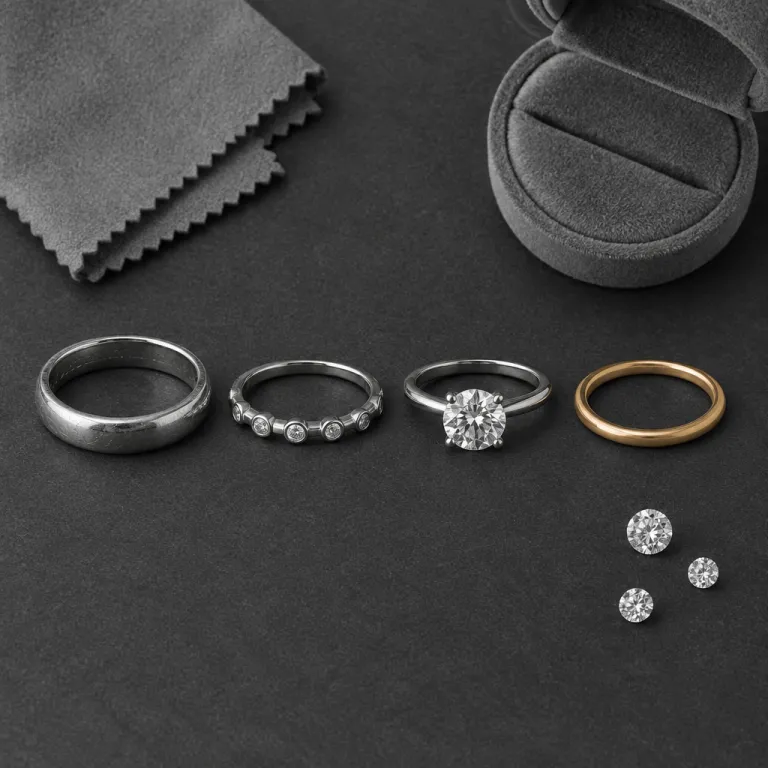
Bridal ring stack guide for an evolving marriage
Bridal ring stack guide for an evolving marriage
Your bridal ring stack guide starts with one honest question. Do you want your engagement ring and wedding band to feel like a finished set, or like the first chapter of a longer story that future bands and rings will quietly continue? When you treat every ring as part of a growing collection, you free yourselves from the pressure of getting everything perfect on day one.
For many couples, the original engagement ring and wedding ring are the emotional anchors, while later stacking rings and bands become markers of anniversaries, babies, career shifts, and private victories. That means your first choices should be structurally sound and proportioned to support future stacking wedding additions without constant resizing or redesign. Think of the central diamond ring and its wedding band as the architectural core, then let future ring stacks and stack rings play around that framework.
From a technical point of view, this bridal ring stack guide must balance aesthetics, comfort, and durability so you can wear the full stack every day. A tall cathedral setting with a large diamond can look dramatic, yet it may limit how flush a future band ring can sit beside it. Lower settings, slightly tapered shanks, and thoughtful metal choices in yellow gold, white gold, rose gold, or platinum alloys will create a stable base for long term ring stacking and layering.

The three stacking philosophies for matching sets
When couples ask for a bridal ring stack guide, they usually fall into three stacking philosophies. The first is the matched set, where the engagement ring, wedding band, and later bands share the same metals, profile, and diamond style so the stack reads as one continuous line. This works beautifully for people who want their wedding rings to feel calm, symmetrical, and almost architectural on the hand.
The second philosophy is curated contrast, where you intentionally mix yellow gold with white gold or platinum, combine baguette diamonds with round brilliant diamonds, and alternate polished bands with textured band ring designs. Here, the engagement rings and wedding bands do not need to match, but they must relate through repeated details like shared claw prongs, similar band widths, or a consistent ring white or ring yellow tone. This approach lets you add new rings over time without feeling locked into a single era or trend.
The third philosophy is organic growth over milestones, which suits the Anniversary Upgrader persona perfectly. You start with a simple engagement ring and a slim wedding band, then add a rose gold anniversary band, a birthstone ring, or a travel band whenever life hands you a new chapter. The stack becomes a timeline on your finger, where each ring, each diamond, and each metal choice recalls a specific moment rather than a coordinated marketing image.
Zendaya, the cool gap, and what it means for you
The Zendaya inspired gap between her horizontal cushion cut diamond ring and a simple gold band crystallized a shift already happening in bridal ring stacks. Instead of forcing a flush fit, couples are leaving a deliberate sliver of skin between the engagement ring and wedding band, using spacer bands or ultra slim stacking rings to frame that negative space. The result feels modern, a little rebellious, and very intentional, especially when you mix yellow gold with a cool white gold or platinum band.
This visible gap works best when the engagement ring has a strong silhouette, such as an east west cushion, an elongated oval, or a crisp emerald cut diamond. A bridal ring stack guide that embraces the gap stack will suggest a lower profile wedding band, often in contrasting metals, so the eye reads the space as part of the design rather than an awkward mismatch. For Anniversary Upgraders, adding a thin rose gold spacer or a pavé gold diamond band between existing rings can instantly update an older set without replacing the original pieces.
The key is to treat that gap as a design tool, not a flaw, and to choose bands and rings that echo the engagement ring’s proportions. If your center diamond ring sits high, a slightly curved band ring or contoured wedding band can frame it while still leaving a breath of skin. Over time, you can stack rings above and below, building a vertical story where metals, diamonds, and textures shift, but the central engagement ring remains the quiet constant.
Planning a stack that can grow without a redesign
A smart bridal ring stack guide does not just ask what you love now, it asks what you might want to add in five, ten, or twenty years. Start by mapping your likely milestones, such as a five year anniversary band, a birthstone ring for a child, or a low key travel band for trips where you leave the big diamond at home. When you plan space for these future rings, you avoid the expensive cycle of redesigning your engagement ring or wedding band every time life changes.
Structurally, your engagement ring should leave at least one side clear for future stacking, which means avoiding overly wide shoulders, heavy halos that overhang the finger, or sharp knife edge bands that make stacking uncomfortable. A shank width between about 1.8 and 2.2 millimetres usually balances strength and elegance, giving you room to add two or three slim bands without the stack feeling bulky. Bench jewellers surveyed by the Jewelers of America and similar trade bodies often describe this range as a practical sweet spot for daily wear, because it resists bending while still looking refined.
Think in terms of anchor pieces and supporting players when you create your long term ring stack. The anchor is usually the engagement ring, sometimes paired with a substantial wedding band, while the supporting bands are narrower, lighter, and easier to mix in different metals like yellow gold, white gold, rose gold, or platinum. This hierarchy lets you change the mood of your wedding rings by swapping a few bands, without ever touching the core diamond ring that carries the deepest memories.
Matched sets that still leave room to play
Many couples still love the romance of matching wedding band sets, and a thoughtful bridal ring stack guide can absolutely support that preference. A matched set might pair a solitaire engagement ring in yellow gold with a perfectly contoured yellow gold wedding band, then echo that profile in a third band ring with pavé diamonds. The trick is to keep at least one band slim and straight so it can sit comfortably above or below the main pair when you decide to stack rings later.
When you choose matching wedding band sets, pay attention to the exact shade of your metals, because ring white tones in white gold can vary from icy to slightly warm depending on rhodium plating. If you think you might add rose gold or platinum bands in the future, ask your jeweller to show you how those metals look against your chosen yellow gold or white gold alloy. A subtle mismatch in colour can be charming, but a harsh clash between a very yellow gold and a greyish white metal can make the whole stack feel unintentional.
It can help to look at real world examples of matching sets that still evolve, such as the detailed breakdowns in this guide to matching wedding band sets for your special day. Notice how some couples start with a classic engagement ring and wedding band, then later slide a thin diamond ring or textured band between them to mark an anniversary. That small addition respects the original matched style while signalling that your marriage, like your ring stacks, is allowed to change shape over time.
Leaving space for future diamonds and bands
If you already know you want more diamonds in your life, design for that from the start. Choose an engagement ring with a center diamond that feels right for your hand now, then keep the wedding band simple so you can add a gold diamond eternity band or two later without visual overload. A bridal ring stack guide that plans for future sparkle will often suggest alternating plain metals and diamond bands, so the eye has somewhere to rest.
For example, you might wear a white gold engagement ring with a round brilliant diamond, pair it with a plain white gold wedding band, then add a rose gold pavé band on one side and a yellow gold diamond ring on the other. The alternating metals and textures create rhythm, while the consistent band widths keep the stack cohesive. Over time, you can rotate which bands you wear daily, preserving the more delicate stacking rings for special occasions.
Remember that every extra ring adds friction and micro movement, which can slowly wear down prongs and settings, especially on softer metals like high karat yellow gold. Trade organisations such as the Gemological Institute of America (GIA) and the American Gem Society (AGS) routinely advise regular inspections for bridal jewellery, particularly once you are stacking three or more bands. Scheduling those checkups is basic maintenance for a set of wedding rings that you expect to wear, stack, and enjoy for decades.
Metal mixing rules for modern matching sets
Metal mixing used to be treated like a faux pas, but a modern bridal ring stack guide treats it as one of your strongest design tools. The question is not whether you can mix yellow gold with white gold or platinum, it is how to do it with intention so the stack feels cohesive. When you get the balance right, your engagement ring and wedding band become the calm centre, while the surrounding bands and rings shift mood with each metal change.
Start by choosing a dominant metal that appears in at least two pieces, usually the engagement ring and wedding band, then use contrasting metals as accents in your stacking rings. If your core set is a white gold engagement ring with a matching white gold wedding band, you might add a slim rose gold band ring above and a yellow gold diamond ring below to frame the central pair. The repeated white metal keeps the stack grounded, while the rose and yellow tones add warmth and depth without feeling chaotic.
Gold and platinum combinations deserve special attention, because platinum is denser and naturally white, while most white gold relies on rhodium plating to achieve its bright ring white finish. When you place a platinum band next to a white gold ring, the subtle difference in hue and shine can either look luxuriously layered or slightly off, depending on the exact alloys. Many working jewellers recommend either committing to platinum for all white metals in the stack or using platinum only for the most exposed band, such as a plain wedding ring that takes the most daily wear.
When yellow gold and platinum work, and when they clash
Yellow gold and platinum can be a powerful pairing when you treat them like light and shadow. A platinum engagement ring with a bright diamond can sit between two slim yellow gold bands, creating a frame that makes the centre stone look even whiter by contrast. This works especially well for Anniversary Upgraders who want to add warmth to an older platinum set without replacing the original engagement ring.
Where yellow gold and platinum clash is usually in proportion, not colour, such as when a very thick yellow gold wedding band overwhelms a delicate platinum engagement ring. If the band ring is significantly wider or heavier than the engagement ring, the stack can look bottom heavy and unbalanced on the finger. A more harmonious approach is to keep the platinum piece slightly wider or equal in width, then let the yellow gold bands act as fine lines of colour around it.
For couples drawn to more unusual shapes, such as pear shaped engagement rings, it is worth studying how different metals affect the outline of the stone. Resources like this guide to pear shaped engagement rings with matching bands show how a white metal halo can sharpen the point of the pear, while a yellow gold bezel softens it. Translating that insight into your own bridal ring stack guide means choosing metals that either emphasise the geometry of your diamond or gently blur it, depending on your hand and style.
Rose gold, white gold, and yellow gold in one stack
Triple tone stacks that combine rose gold, white gold, and yellow gold can look intentional and chic, or messy and accidental. The difference lies in repetition and rhythm, such as repeating each metal at least twice across the stack so no single ring feels like an outlier. A classic approach is to centre the engagement ring and wedding band in one metal, then flank them with alternating rose and yellow bands that echo each other.
For example, you might wear a yellow gold engagement ring with a matching yellow gold wedding band, then add a white gold pavé band above and a rose gold textured band below. Later, you could introduce another white gold diamond ring on top and a slim rose gold plain band at the base, creating a mirrored pattern that feels deliberate. This kind of structured repetition lets you enjoy the full palette of metals without sacrificing the calm, matched feeling many couples still want from their wedding rings.
Pay attention to your skin tone and wardrobe when choosing this mix, because metals interact with both. Cooler skin tones often love the crispness of ring white metals like white gold and platinum, while warmer tones glow against ring yellow shades of yellow gold and the blush of rose gold. The most flattering bridal ring stack guide will not follow rigid rules, but it will notice which metals make your hand look alive and which make it look dull, then build your stack accordingly.
| Metal | Pros in a stack | Watch outs |
|---|---|---|
| Platinum | Very durable, naturally white, develops a soft patina rather than losing metal. | Heavier on the finger, higher price point than most gold alloys. |
| White gold | Bright, versatile, often more affordable than platinum. | Rhodium plating wears over time and needs periodic re-plating. |
| Yellow gold | Classic warmth, easy to resize and repair, flatters many skin tones. | Softer in higher karats, so surface scratches show more quickly. |
| Rose gold | Romantic blush tone, beautiful with vintage inspired designs. | Can be slightly more brittle in very thin bands due to copper content. |
Gap stack versus flush stack for comfort and longevity
The gap stack and the flush stack are not just aesthetic choices, they are engineering decisions that affect how your rings age. A flush stack, where the wedding band and engagement ring sit tightly together, can feel like one solid piece on the finger, which many people love. A gap stack, where you intentionally leave space or use a slim spacer band, allows more movement and air, changing both comfort and wear patterns over time.
With a flush stack, the main risk is metal rubbing, because the inner faces of the engagement ring and wedding band grind against each other with every movement. Over years, this can thin the shanks, soften engraving, and loosen pavé diamonds along the sides, especially in softer yellow gold or high karat rose gold. A well designed bridal ring stack guide will suggest either a tiny manufacturing gap or a sacrificial spacer band ring that takes the friction instead of your main rings.
Gap stacks, like the Zendaya inspired look, reduce direct metal on metal contact between the engagement ring and wedding band, but they introduce more independent movement among the stacking rings. That means each band can twist slightly, which some people find more comfortable, while others prefer the locked in feeling of a flush stack. The best approach is to try both configurations in person, ideally with three or more bands, because a single ring stack behaves very differently from a full set of wedding rings and anniversary bands.
Comfort, sizing, and daily wear with 3+ rings
Once you are wearing three or more rings on one finger, sizing becomes less theoretical and more about lived comfort. Stacking multiple bands effectively increases the circumference of metal around your finger, which can make your usual size feel tighter, especially in warm weather or during pregnancy. Many jewellers recommend sizing the engagement ring and wedding band true to size, then making later stacking rings a quarter size larger to accommodate swelling and movement.
Ring guards and sizing beads can help stabilise a top heavy engagement ring within a larger stack, preventing it from spinning while still allowing you to slide additional bands on and off. These small adjustments are especially useful when your central diamond ring is significantly heavier than the surrounding bands, such as a 1.5 carat oval in a platinum setting flanked by slim yellow gold bands. The goal is to keep the weight balanced so the stack feels like a single, comfortable unit rather than a collection of separate rings fighting for position.
Daily wear also means thinking about activities like lifting weights, caring for children, or working with your hands, where a tall stack can catch or scratch. Some couples choose a dedicated low profile wedding band or travel band ring in a durable metal like platinum or 14 karat white gold for these situations, leaving the full stack for evenings and weekends. That does not make the main wedding rings any less meaningful, it simply acknowledges that longevity comes from thoughtful wear, not from locking your jewellery in a box.
Durability across different metals and materials
Not all metals and materials age the same way in a stack, and a responsible bridal ring stack guide will be honest about that. Platinum is dense and tends to displace rather than lose metal when scratched, developing a soft patina that many people love, while white gold and yellow gold gradually lose material with each polish. Rose gold, with its higher copper content, can be slightly more brittle, which matters if you plan to wear very thin rose gold stacking rings every day.
Diamonds are hard but not indestructible, and their edges can chip if they repeatedly knock against other stones or hard surfaces in a tight stack. Channel set or bezel set diamonds in a wedding band offer more protection than exposed prongs, especially when stacked directly beside a large engagement ring. If you want a full eternity band with diamonds all the way around, consider wearing it as a floating piece in the stack rather than locking it directly against the engagement ring where it will take the most impact.
Over time, regular inspections and gentle cleaning will do more for the longevity of your ring stacks than any single design choice. A jeweller can spot thinning bands, loose diamonds, or worn prongs long before you feel or see a problem in daily wear. Treat that maintenance as part of the ritual of marriage, the quiet upkeep that keeps both the relationship and the wedding rings strong.
| Style | Pros | Considerations |
|---|---|---|
| Flush stack | Feels like one solid ring, very traditional look, less twisting on the finger. | More metal-on-metal wear, can trap soap and lotion between bands. |
| Gap stack | Modern, airy look, less direct rubbing between main rings. | More movement between bands, may feel less stable to some wearers. |
Growing your stack with milestones, meaning, and restraint
The most satisfying bridal ring stack guide treats each new ring as a chapter heading, not a random purchase. Anniversary Upgraders are in a perfect position to do this, because you already have a core engagement ring and wedding band that carry deep history. Now the question becomes which bands and rings you add to honour that history rather than drown it in sparkle.
One elegant approach is to assign each milestone its own metal or motif, such as rose gold for anniversaries, yellow gold for children’s birthstones, and white gold or platinum for career or life achievements. Over time, your ring stacks will tell a coded story that only the two of you fully understand, even as others simply see a beautifully layered set of wedding rings and stacking rings. This is where matching sets give way to matching meaning, and where a band ring can hold as much emotional weight as the original diamond ring.
Restraint matters here, because not every event needs a new ring, and not every ring needs diamonds. Sometimes the most powerful addition is a plain gold band, slightly wider or narrower than your existing bands, that you add after a hard season you have weathered together. In a culture that often equates love with carat weight, choosing a simple metal band as a symbol of endurance can feel quietly radical.
Anniversary bands, birthstones, and travel rings
Anniversary bands are the most common way couples expand their stacks, and a thoughtful bridal ring stack guide will help you choose one that plays well with your existing set. If your engagement ring already has a halo of diamonds, a plain yellow gold or white gold anniversary band might provide the visual rest the stack needs. If your original wedding band is very simple, a gold diamond eternity band can add drama without overwhelming the engagement ring.
Birthstone rings introduce colour and personality, especially when set in metals that echo the stone’s tone, such as emerald in yellow gold or sapphire in white gold. These rings can sit above or below the main wedding rings, or even live on a neighbouring finger while still reading as part of the overall stack. Travel bands, usually plain and low profile, let you leave the more valuable diamond ring and delicate stacking rings at home while still wearing a symbol of your marriage.
As you add these pieces, it helps to revisit your original philosophy, whether matched set, curated contrast, or organic growth, so the stack does not drift into visual noise. Reading perspectives like this essay on how couples are rewriting ring traditions can also reset expectations about what a bridal ring stack should look like. The goal is not perfection, but a set of wedding rings and bands that feel like they could only belong to the two of you.
Letting your stack reflect real life, not marketing images
Marketing images often show pristine ring stacks with flawless diamonds and untouched metals, but real life stacks tell a different story. They show tiny scratches from holding a child’s hand, softened edges from years of cooking, and a patina that no showroom can replicate. Those marks are not damage, they are evidence that your wedding rings are doing their job, living your life with you.
As you continue to add and wear new bands, remember that the most meaningful stacks are rarely the most symmetrical or expensive. A modest yellow gold band ring added after a difficult year can feel more precious than a larger diamond ring bought on impulse. What matters is that each addition to your ring stack feels intentional, aligned with your values, and comfortable enough to wear on an ordinary Tuesday.
In the end, the power of a thoughtful bridal ring stack guide lies in helping you see your rings as a living collection rather than a fixed set. Your engagement ring, wedding band, and every future band ring or diamond ring become chapters in an ongoing story. The real luxury is not the certificate, but how it catches light on a Tuesday morning.
FAQ about building a bridal ring stack that grows
How many rings can I comfortably stack on one finger
Most people find that three to five rings on one finger is the practical limit for daily wear. Comfort depends on band width, metal thickness, and how your knuckles swell throughout the day. Try different combinations in person, and remember that several slim bands often feel better than two very wide ones.
Should my wedding band match my engagement ring
Your wedding band does not have to match your engagement ring, but it should relate to it in some intentional way. Matching metals or repeating a detail like a shared profile, similar diamond setting, or consistent band width can create harmony without perfect symmetry. Many couples now choose a coordinated rather than identical look so they can add contrasting bands later.
Is it safe to wear a full stack every day
Wearing a full stack daily is generally safe if the rings are well made, properly sized, and checked regularly by a jeweller. The main risks are metal wear from friction between bands and potential damage to exposed diamonds in very tight stacks. If you work with your hands or exercise frequently, consider a simpler daily combination and reserve the full stack for lower impact days.
Can I mix different gold colours and still look cohesive
Mixing yellow gold, white gold, and rose gold can look very cohesive when you repeat each metal at least twice in the stack. Using one metal as the dominant base for your engagement ring and wedding band, then adding contrasting metals in slimmer bands, usually creates balance. Pay attention to the exact shades of each alloy so the overall effect feels intentional rather than random.
What is the best order to wear my rings on my finger
The traditional order is wedding band closest to the heart, then engagement ring, then any additional bands on top. Many modern stacks break this rule for comfort or aesthetics, placing a slim guard band at the base or a spacer between rings to reduce friction. The best order is the one that feels secure, comfortable, and visually balanced on your own hand.